
Opportunity Zones: Deferring (and Erasing) Capital Gains with a QOF
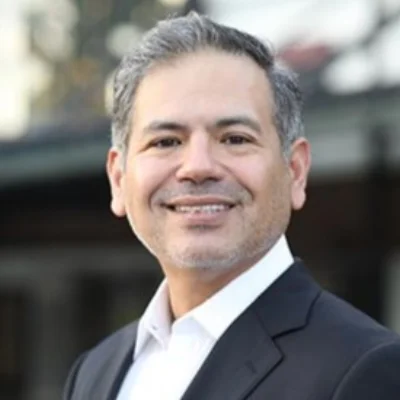 By Al Nuñez, CPA, JD, Managing Partner at Silicon Valley Tax LLC.
Reviewed by Grace Hui, EA (17 years, unlimited IRS audit representation).
By Al Nuñez, CPA, JD, Managing Partner at Silicon Valley Tax LLC.
Reviewed by Grace Hui, EA (17 years, unlimited IRS audit representation).
The short answer
Bay Area CPA guide to Opportunity Zone tax deferral: defer capital gain via a QOF, the 10-year exclusion, OBBBA timeline, and California's non-conformity.
A Bay Area founder who sells a chunk of long-held C-corp stock for a $500K capital gain and rolls it into a Qualified Opportunity Fund within 180 days can defer roughly $119K of federal tax immediately, and on a successful 10-year hold, eliminate federal tax on every dollar of QOF appreciation. If your startup got acquired, you closed a secondary, or you sold a rental property in Cupertino and you are looking at a seven-figure capital gain, the IRS has one of the most powerful deferral tools on the books waiting for you. It is called the Qualified Opportunity Zone program, codified at IRC Section 1400Z-1 and Section 1400Z-2, and a properly executed roll-in can defer your federal capital gain for years and permanently erase the federal tax on whatever your new investment grows to over the next decade.
Two catches a Bay Area investor needs to understand before writing the check. First, the original program was set to sunset on December 31, 2026; the One Big Beautiful Bill Act (OBBBA, Public Law 119-21, signed July 4, 2025) extended and rebuilt the framework. Treasury regulations implementing the OBBBA-era provisions are still rolling out through 2026, so coordinate with your CPA on the latest Notice and proposed-reg guidance before finalizing any roll-in. Second, California does not conform. The federal exclusion that wipes out 100% of the back-end appreciation does nothing for your Franchise Tax Board return.
This guide walks through the mechanics of an Opportunity Zone roll, the three layers of federal benefit, what OBBBA changed, the reporting forms that trip people up, a worked example for a Bay Area engineer with a $500K RSU gain, and how OZ stacks up against the alternatives you should be comparing it to. SVT handles the tax reporting and planning side of these investments. Picking which Qualified Opportunity Fund to invest in is a decision for your investment advisor; we make sure the tax mechanics land the way the statute promises.
What an Opportunity Zone Investment Actually Is
Congress created Opportunity Zones in the Tax Cuts and Jobs Act of 2017 to push private capital into census tracts the Treasury designated as economically distressed. The deal is straightforward: if you have a recognized capital gain (from stock, real estate, business sale, crypto, anything), you can roll the gain dollar (not the entire proceeds, just the gain) into a Qualified Opportunity Fund within 180 days of the triggering sale. In exchange, the federal tax on that original gain is deferred until December 31, 2026 (the original TCJA recognition date) or until you sell the QOF interest, whichever comes first.
A Qualified Opportunity Fund is a partnership or corporation that elects QOF status by filing Form 8996 with its first-year tax return. To keep that status, the fund must hold at least 90% of its assets in Qualified Opportunity Zone property, which is generally a business or real estate located in a designated zone and operating an active trade or business there. The 90% test is measured semi-annually, and missing it triggers monthly penalties.
Most retail and accredited investors access the program through professionally managed QOFs that have already done the zone diligence, the property acquisition, and the substantial-improvement work that the rules require. Direct investment (forming your own QOF to buy a specific building) is possible and sometimes preferable for sophisticated real estate investors, but the compliance burden is real.
The Three Layers of Federal Benefit
The OZ structure stacks three distinct tax benefits. Understanding which ones still apply matters because two of them have aged out under the original TCJA rules and OBBBA partially resets the clock.
1. Deferral of the original capital gain
The dollars you roll in stop accruing tax immediately. Under TCJA, recognition was pushed to the earlier of December 31, 2026 or your QOF disposition. OBBBA's reset gives investments made under the new regime a fresh five-year deferral window measured from the date of investment rather than a fixed sunset date, which is a meaningful upgrade for gains realized in 2026 or later.
2. Basis step-up if held long enough (largely expired for pre-OBBBA investors)
The original program offered a 10% basis increase in your deferred gain if you held the QOF for five years, and an additional 5% if you held for seven. Because those windows ran out before the 2026 recognition date, investors who rolled in after 2019 (five-year step-up) or 2021 (seven-year step-up) cannot reach the basis bumps. OBBBA's renewed program restores a basis step-up framework for new investments, with details still being clarified in Treasury guidance through 2026.
3. Permanent exclusion of QOF appreciation at the 10-year mark
This is the headline benefit and the one that still works. If you hold your QOF investment for at least 10 years and sell before the end of the program's terminal date, you can elect to step the basis of your QOF interest up to fair market value at sale. In practice, that means zero federal capital gains tax on the appreciation inside the fund over the holding period. On a $500K investment that grows to $1.5M, the $1M of growth comes out federally tax-free.
What OBBBA 2025 Changed
The One Big Beautiful Bill Act of 2025 reauthorized and reshaped the OZ program rather than letting it sunset. The headline changes a Bay Area investor cares about:
- New round of zone designations. Governors nominate updated census tracts, and Treasury certifies a second wave of QOZs. Some 2018-era zones roll off; new ones (including additional Bay Area tracts) come on. Always confirm a fund's underlying properties sit in a currently-designated zone.
- Second-bite deferral mechanism. Gains realized in 2026 and later qualify for a refreshed deferral window measured from the date of investment, replacing the fixed December 31, 2026 recognition date. This is what makes the program viable for gains realized in 2027 and beyond.
- Updated basis step-up schedule for new investments. OBBBA reinstates basis bumps at the five-year and seven-year holding marks for QOFs funded under the new regime, partially restoring a benefit that had expired for late-comers to the original program.
- Stricter reporting and transparency. Funds face expanded annual disclosure requirements on jobs created, capital deployed, and zone-level outcomes. This raises the bar for sponsor quality and makes diligence easier.
- Continued 10-year exclusion. The post-10-year permanent exclusion of appreciation survives and applies to both legacy and new investments, with the program's terminal date pushed well into the 2040s.
Implementation details are still rolling out through 2026 Treasury regulations. If you are planning a roll-in this year, work with a tax advisor who is tracking the current Notice and proposed reg guidance, not stale 2019 commentary.
What Qualifies as a QOF
A Qualified Opportunity Fund is any partnership or corporation organized for the purpose of investing in QOZ property, that self-certifies as a QOF by filing Form 8996 with its first eligible return. The fund must meet the 90% asset test semi-annually. QOZ property can be:
- QOZ stock in a corporation that is itself a Qualified Opportunity Zone Business (QOZB)
- QOZ partnership interest in a partnership that is a QOZB
- QOZ business property held directly by the fund (typically real estate that the fund either acquires post-2017 and substantially improves, or original-use property like new ground-up construction)
For real estate, the substantial improvement rule requires the fund to spend at least as much on capital improvements as it paid for the building (land value excluded) within 30 months of acquisition. This is why most QOF strategies center on value-add or development plays rather than stabilized acquisitions.
For operating businesses, the QOZB rules require at least 50% of gross income from the active conduct of business inside the zone, at least 70% of tangible property used in the zone, and limits on non-qualified financial assets. Tech and software businesses operating from a zone can qualify, but the 50% gross income test sometimes gets messy for a startup with customers everywhere.
California Does Not Conform
This is the gotcha that catches almost every first-time Bay Area OZ investor. California has not adopted IRC Section 1400Z-2 deferral, basis step-up, or 10-year exclusion. From a Franchise Tax Board perspective, the day you sell your original asset and trigger a capital gain, the California tax is due in that year regardless of what you do with the proceeds. Rolling into a QOF saves zero California tax on the original gain.
It gets worse at the back end. When you sell the QOF after 10 years and elect the federal basis step-up, California ignores the election and taxes the full appreciation at standard rates (up to 13.3%, or 14.4% if the mental-health surcharge applies). So a California-resident investor in a QOF pays California tax twice: once on the original gain in the year of sale, and again on the QOF appreciation when they exit.
For a Bay Area investor in the top California bracket, OZ saves the full federal tax on the original gain via deferral (up to roughly 23.8% on long-term capital gain: 20% LTCG + 3.8% NIIT), plus up to 23.8% federal on the QOF appreciation via the 10-year exclusion. That is a meaningful win even with California's full bite. But the planning math has to include California tax as a real cost, not an afterthought. Strategies like changing residency to a no-tax state in advance of the QOF exit, or holding QOFs in non-grantor trusts sited outside California, are worth modeling for larger positions. See our California tax changes guide for related state planning considerations.
Reporting Mechanics
The OZ election lives in two annual forms, and mishandling either one disqualifies the deferral.
Form 8949 with code Z
In the year you trigger the original capital gain and roll it into a QOF, you report the sale normally on Form 8949 and then file a second Form 8949 line with adjustment code Z showing the deferred portion. The deferred amount gets backed out of taxable gain on Schedule D. Get the code and the timing wrong and the deferral fails for the year.
Form 8997 (annual investor statement)
Every year that you hold a QOF interest, you file Form 8997 with your return showing the QOF investments held, prior-year deferrals, and any current-year dispositions. Skipping Form 8997 in any year you hold a QOF is treated as an inclusion event and can accelerate the deferred gain. The IRS does not bend on this.
Form 8996 (fund-level, not your problem)
The QOF itself files Form 8996 annually to self-certify and report the 90% asset test. As an investor you do not file this, but you do want to confirm the fund is filing it correctly and meeting its tests; ask the sponsor for evidence each year. For full IRS guidance, see the Opportunity Zone FAQs page.
SVT prepares Forms 8949 with code Z and the annual 8997 statement as part of return preparation for clients with QOF holdings. This is exactly the kind of reporting where one wrong line item costs six figures.
Worked Example: Bay Area Founder, $500K Capital Gain on Stock Sale
A Palo Alto founder sells $500,000 of long-held C-corp common stock from an earlier startup in March 2026 (basis $0, holding period more than one year, not §1202-eligible). She now has a $500K long-term capital gain, and her tax bill at federal + California rates would run roughly $185K to $240K combined.
Important: RSU vest-and-sell is W-2 ordinary income, not capital gain, and is NOT eligible to roll into a QOF. Only capital gains and qualifying §1231 gains qualify. Eligible sources include stock sales held more than one year, business sales, crypto gains, and rental property dispositions.
She rolls the full $500K capital gain into a Qualified Opportunity Fund within 180 days. Her tax outcome:
- Federal year of sale (2026): $0 federal tax on the $500K gain. Saved roughly $119K (23.8% = 20% LTCG plus 3.8% NIIT) in current-year federal tax. The gain is deferred under the OBBBA refreshed window.
- California year of sale (2026): Full $500K still taxed at California rates. Roughly $66K owed to the FTB this year. California ignores the deferral entirely.
- 2031, recognition event: The original $500K deferred gain becomes federally taxable. She pays roughly $119K federal tax then.
- 2036, 10-year exit: The QOF investment has grown to $1.5M. She sells, elects the federal basis step-up to fair market value, and pays $0 federal tax on the $1M of appreciation. Saved roughly $238K (23.8%) in federal capital gains tax that would have been owed without the exclusion.
- 2036, California side: California taxes the full $1M of appreciation. Roughly $133K owed to the FTB.
Net of the California drag, she still saves roughly $238K in federal tax on the appreciation plus the time value of deferring $119K of federal tax for seven years. The federal program works as advertised. California costs her the better part of $200K across the two transactions, which is the price of staying a California resident through the exit.
180-day clock running on a recent gain? We model the QOF roll-in math, California cost, and reporting forms before the window closes for Bay Area founders and real estate investors. Schedule a complimentary consultation.
What Goes Wrong Without a CPA
The most common OZ mistake we see at intake: a Bay Area investor rolls the gain into a QOF on day 165 but misses Form 8997 in year two of the hold. The IRS treats the missed annual filing as an inclusion event, accelerates the deferred gain, and assesses tax plus penalty. The avoidable cost on a $500K rolled gain is roughly $119K of federal tax pulled forward, plus penalty.
The second pattern: investors who pull a Form 8949 code Z entry from generic tax software without confirming the QOF has actually filed Form 8996 and met its 90% asset test. A QOF that loses its status mid-hold blows up every investor's deferral retroactively. DIY filing software cannot independently verify fund-level compliance. Those are the items where engagement pays for itself many times over.
OZ vs. the Alternatives
OZ is not the right tool for every capital gain. Other deferral and exclusion strategies, in rough comparison:
| Strategy | Eligible gain type | Federal benefit | CA conformity | When to consider |
|---|---|---|---|---|
| QOZ / OZ | Any capital gain | Defer + 10-yr exclusion of appreciation | No | Diversified gain, 10-yr horizon, OK with illiquid alt investment |
| QSBS (Section 1202) | Founder / early employee C-corp stock | $10M / 10x basis excluded for pre-July 5, 2025 stock; $15M cap under OBBBA (Pub. L. 119-21) for QSBS issued after that date | No | Eligible startup stock held 5+ yrs; see QSBS guide |
| Section 1031 exchange | Real property only (post-TCJA) | Defer gain into like-kind property | Yes (mostly) | Investor wants to stay in real estate, not exit to cash |
| Donor-Advised Fund | Appreciated securities | Charitable deduction + avoid gain entirely | Yes | Philanthropic intent, no desire to keep the dollars personally |
| Charitable Remainder Trust | Appreciated assets | Spread gain over income stream | Yes | Want income for life with charitable remainder |
For a founder whose gain qualifies for QSBS, the Section 1202 exclusion is almost always the better tool because it eliminates federal tax outright without requiring a 10-year illiquid investment. For a real estate investor staying in the asset class, a 1031 exchange preserves California conformity, which OZ does not. OZ shines when the gain is from a diversified source (RSUs, stock sale, business sale, crypto) and the investor wants to put the money to work for a decade without paying tax on the growth.
When to Talk to Us
The 180-day clock to roll a gain into a QOF starts ticking the day the gain is realized. Most planning failures happen because investors hear about OZ after the window has closed, or because they roll in without modeling the California cost, the long-term liquidity tradeoff, or the reporting burden. Both are avoidable with a 30-minute call before the trigger event.
SVT advises on the tax side of QOF investments: the 180-day eligibility math, the Form 8949 code Z election, annual Form 8997 reporting, California modeling, and integration with the rest of your equity comp and exit planning. We do not select Qualified Opportunity Funds for you; that decision belongs to your investment advisor or registered investment adviser, who can evaluate fund sponsors, underlying real estate, fee structures, and liquidity terms. Our role is making sure the tax reporting holds up and the deferral lands as designed. For broader equity-comp planning context, see our post-IPO tax strategy guide and our startup founders' tax overview.
Our tax planning team works through QOF rolls regularly for Bay Area engineers, founders, and real estate investors. If you are sitting on a recently realized capital gain or have one coming, book a complimentary consultation and we will walk through the 180-day timeline, the California math, and whether OZ fits your situation better than the alternatives.
Frequently Asked Questions
Do I have to invest the entire sale proceeds, or just the gain?
Only the gain. If you sell stock for $700K with a $200K basis, your gain is $500K and that is the maximum eligible roll-in. The basis portion stays in your hands and is not part of the QOF investment.
What happens if I sell the QOF before 10 years?
You lose the appreciation exclusion. The deferred original gain becomes taxable in the year of sale (if it had not already been recognized), and any appreciation in the QOF is taxed as a normal capital gain. The deferral up to that point still worked; you just do not get the back-end exclusion.
Can I invest gains from cryptocurrency or a business sale?
Yes. Any capital gain or qualifying Section 1231 gain qualifies, regardless of source. Crypto gains, business sale gains, and even certain partnership distributive share gains can be rolled into a QOF within the 180-day window.
Does the 180-day window run from sale date or year-end?
It depends on the type of gain. For most direct sales the window starts on the date of sale. For gains flowing through from a partnership K-1, you can elect to start the 180 days on the last day of the partnership's tax year, which often gives you nearly a full year of additional planning time. Check the K-1 carefully and elect deliberately.
Will California ever conform to Opportunity Zones?
There is no current legislation pending in Sacramento to conform to IRC Section 1400Z. California's pattern is to selectively decouple from federal incentives that direct capital outside the state, and the political appetite for full conformity is low. Plan as if California will continue to tax both the original gain and the back-end appreciation.
Who picks the actual Qualified Opportunity Fund I invest in?
Your investment advisor or registered investment adviser. SVT does not select QOFs, evaluate fund sponsors, or provide investment recommendations; we are a tax and accounting firm. We handle the tax election, the Form 8949 reporting, the annual Form 8997 filing, and the California modeling. The fund selection itself is an investment decision that belongs with a licensed investment professional.