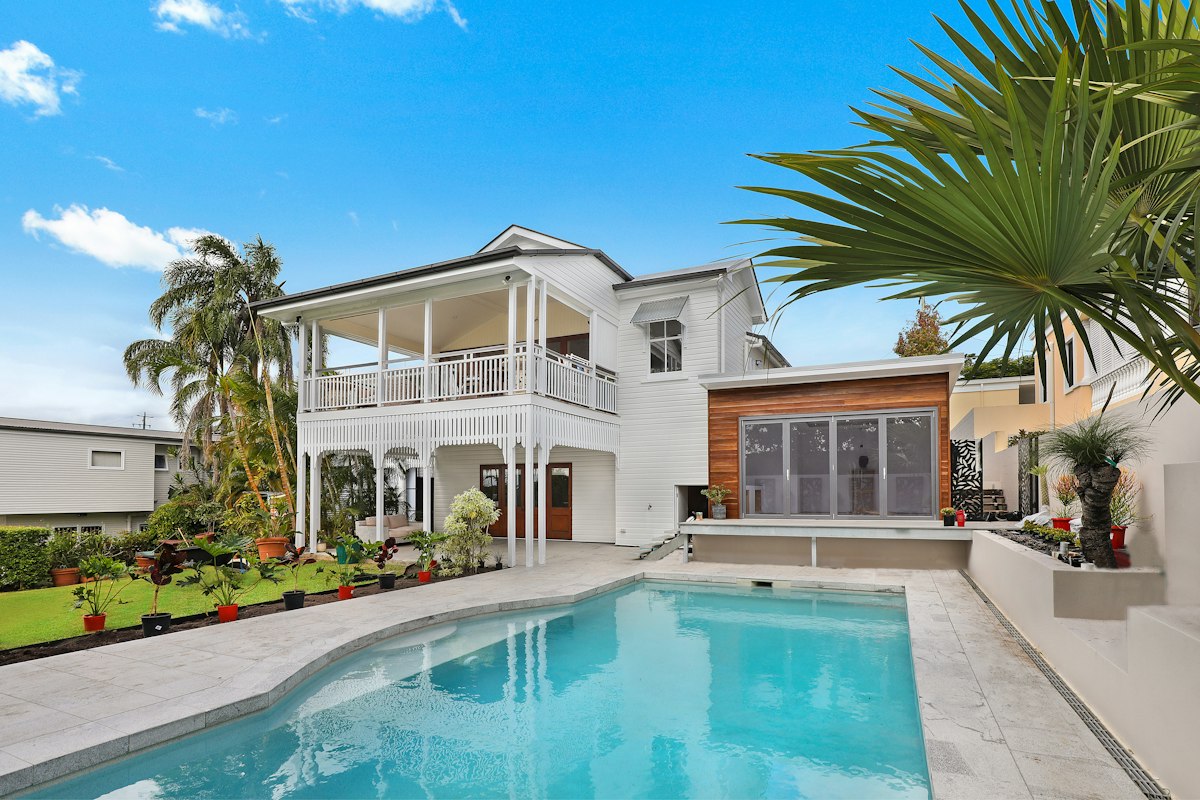
Atherton Tax Accountant: Founders, VC Partners, and Family Offices
Atherton is the highest-net-worth zip code in the United States by median household income. It is not a tech-employee market. The people who live here are founders who took their companies public, venture capital and private equity partners whose carried interest has compounded over multiple funds, retired FAANG executives managing concentrated stock positions, hedge fund principals, and multi-generational wealth families whose financial lives span several countries and decades. The tax profile that comes with this territory is among the most complex in the country.
Silicon Valley Tax has served Bay Area clients at this level of complexity for over 23 years. Our office is at 2051 Junction Ave, Suite 200, San Jose, 22 miles south of Atherton on US-101. We serve Atherton clients in person, by Zoom, or fully remotely through our secure portal. This page covers the tax and planning situations we handle most often in Atherton. To book a complimentary consultation, call (408) 383-9870 or use the online booking form.
Who We Serve in Atherton
The range of situations in Atherton is narrow in one sense and extraordinarily deep in another. These are not complicated W-2 returns. The complexity comes from liquidity events, fund economics, trust and estate structures, philanthropic vehicles, and cross-border holdings that have accumulated over careers and lifetimes.
1. Technology founders post-exit
The defining tax event for many Atherton residents is a company sale or IPO that generated eight or nine figures of gain in a single year. The central planning question before a liquidity event is almost always the Section 1202 QSBS exclusion: whether the stock qualifies, how much of the gain can be excluded, and what to do with the rest. For founders who have already crossed the $10 million threshold, the §1045 rollover into replacement QSBS and the strategy of multiplying the exclusion across family members before the transaction closes are the core planning levers. After the liquidity event, the priorities shift to managing concentrated positions, funding philanthropic vehicles, and repositioning the proceeds for the next decade in a tax-efficient structure.
2. Venture capital and private equity partners
General partners at Sequoia, Andreessen Horowitz, Kleiner Perkins, and dozens of other Peninsula-based funds live in Atherton. Their annual returns involve multiple K-1s from fund entities, carried interest income with character questions under §1061, management fee income, and distributions from portfolio company exits. The three-year holding period rule under the Inflation Reduction Act means that the character of carry income depends on asset-level holding periods inside each fund, not on the fund partnership interest itself. Getting this right requires reading each K-1 carefully against the fund's underlying investment activity, not simply accepting the character as reported.
3. Family office principals and multi-generational wealth families
A number of Atherton families have moved beyond the operating phase of wealth creation into the stewardship phase. This means trust structures (revocable living trusts, irrevocable life insurance trusts, GRATs, IDGTs, dynasty trusts), private foundations, donor advised funds, and investment entities managing diversified portfolios. The annual tax work for these families involves Form 1041 trust returns, Form 990-PF foundation returns, entity-level filings, and coordination with estate planning counsel and investment advisors. The tax work is the connective tissue that keeps the entire structure compliant and efficient year over year.
4. Retired FAANG-era executives
Many Atherton residents built their wealth as executives at Apple, Google, Meta, and Microsoft over the two decades of explosive equity appreciation before and after each company's IPO. The issues are concentrated stock, RSU income that has already been taxed and now sits as a large capital asset, deferred compensation distributions under §409A, and the estate planning question of how to pass the concentration to the next generation without triggering a taxable sale. Charitable remainder trusts, private placement life insurance, and grantor trust sales are among the vehicles we analyze for these clients.
5. Cross-border wealth families
Atherton has a meaningful population of families whose wealth originated in Hong Kong, Canada, the United Kingdom, or other countries and who have since established permanent U.S. residence. These families face the full international compliance stack: FBAR, Form 8938, foreign tax credits, treaty analysis for registered accounts and investment structures, and the ongoing question of how U.S. tax law interacts with the home-country rules on their remaining foreign holdings.
QSBS §1202 Planning: The Atherton-Specific Priority
No tax provision has generated more wealth for Atherton residents in the past decade than Section 1202. The exclusion shelters up to the greater of $10 million or 10 times the taxpayer's adjusted basis in qualified small business stock from federal capital gains tax. For a founder who invested $500,000 in their company's C-corp stock and held it for more than five years before a qualifying sale, the 10x basis multiplier means up to $5 million of gain is excluded. A $100 million exit for a founder holding qualifying stock from a $1 million initial basis would have a $10 million exclusion. For married couples filing jointly, each spouse holds a separate exclusion, which doubles the available shelter to $20 million or 20x basis if the stock was properly structured before the marriage or the stock was otherwise issued to each spouse separately.
The §1045 rollover for excess gain
Once the §1202 exclusion is exhausted, the remaining gain is taxable. The §1045 rollover defers that taxable gain by reinvesting the proceeds from qualifying QSBS into replacement QSBS within 60 days of the sale. The replacement stock must itself meet the QSBS requirements under §1202(c): the issuing corporation must be a domestic C-corporation with aggregate gross assets not exceeding $50 million at the time of issuance (counting the proceeds of the current investment), and must be engaged in a qualifying trade or business. The successor holding period carries over from the original stock, so a founder who sells stock held for five years and immediately reinvests into a qualifying early-stage company has a basis in the replacement QSBS that will support a second §1202 exclusion after a five-year hold in the new company. The 60-day reinvestment window is hard and cannot be extended. We work with Atherton founders on identifying qualifying replacement investments before the transaction closes, so the rollover can be executed within the window.
Multiplying the exclusion before a sale
Each taxpayer holds a separate §1202 exclusion cap. Transferring qualifying stock to family members before a liquidity event allows each recipient to hold their own exclusion. Gifts to a spouse, to children, or to an irrevocable trust for which each beneficiary is treated as a separate taxpayer can multiply the available exclusion if structured correctly. The transfer must occur before the sale agreement is signed; stock transferred after a sale agreement is typically respected for this purpose only if the sale has not become substantially certain under the anticipatory assignment of income doctrine. We analyze the transferability rules, the existing cap space, and the timing before any founder client approaches a transaction.
Carried Interest and VC Partner K-1s
The taxation of carried interest is the central annual planning question for Atherton fund partners. The current framework, established by the Inflation Reduction Act amendments to §1061, turns on the holding period of the assets inside the fund, not the holding period of the partnership interest itself.
The three-year holding period rule
Long-term capital gain rates apply to carried interest only if the fund's underlying assets are held for more than three years. Gains attributable to assets held three years or fewer are recharacterized as short-term capital gain under §1061 and taxed at ordinary income rates. The practical implication is that a fund which exits a portfolio company at the two-and-a-half-year mark generates short-term carry income for the general partner, regardless of how long the fund has been in existence. K-1s from funds with active early-exit activity frequently contain a mix of long-term and short-term carry that must be reported separately, and the line item on the K-1 for §1061 recharacterization is often understated or missing from funds that do not have sophisticated tax administration.
Management fee income
Management fees paid by the fund to the general partner are ordinary income at the fund level and flow through as ordinary income on the K-1, regardless of the character of the fund's investments. Management fee waivers, where the general partner waives a portion of the management fee in exchange for an increased profits interest in the fund, have been an area of IRS scrutiny and proposed regulations. We track the current guidance on fee waivers and flag any arrangements that carry regulatory risk in each client's fund documents.
Multi-fund K-1 management
Partners at large venture firms may receive K-1s from five to fifteen fund entities in a single year: the current flagship fund, one or more prior flagship funds still winding down, opportunity funds, rolling funds, and co-investment vehicles. Each K-1 may include ordinary income, long-term capital gain, short-term capital gain, §1061 recharacterized amounts, state allocations, and passive activity loss carry figures. We build and maintain a K-1 tracking ledger for each Atherton fund partner that maps every K-1 line item across all entities before the return is assembled, so nothing is missed and the character of each dollar is correctly identified.
Estate Planning Integration: GRATs, IDGTs, and Dynasty Trusts
Atherton families at the upper end of the wealth spectrum operate in territory where the federal estate and gift tax is a first-order concern. The current basic exclusion amount under the Tax Cuts and Jobs Act stands at $13.99 million per individual for 2025, and the One Big Beautiful Bill Act of 2025 made the elevated exclusion permanent and raised it to $15 million per individual for 2026. For families with assets well above the exclusion, wealth transfer strategies are as important as income tax minimization.
Grantor Retained Annuity Trusts (GRATs)
A GRAT transfers appreciation above the §7520 hurdle rate to trust beneficiaries free of gift tax. A zeroed-out GRAT, where the present value of the retained annuity stream equals the full value of the assets contributed, has zero gift tax cost regardless of appreciation. If the assets underperform, they simply revert to the grantor's estate with no cost other than legal fees. If they outperform, the excess appreciation passes to beneficiaries free of gift and estate tax. GRATs work best with assets that are expected to appreciate rapidly over a short term: pre-IPO shares, concentrated fund stakes approaching a distribution event, or positions in a single company before a catalytic announcement. Atherton families frequently use rolling two-year GRATs funded with concentrated equity positions, with the annuity payments reinvested into new GRATs as each term expires.
Intentionally Defective Grantor Trusts (IDGTs)
An IDGT is an irrevocable trust that is a grantor trust for income tax purposes but outside the grantor's estate for estate tax purposes. The grantor reports all trust income on their personal return and pays the tax, which is effectively an additional tax-free gift to the trust beneficiaries. The sale of assets to an IDGT in exchange for a promissory note is not a taxable event because the grantor and the trust are treated as the same taxpayer for income tax purposes. This allows a founder to sell highly appreciated assets to the trust at current fair market value, removing all future appreciation from the taxable estate, without triggering capital gains tax. The promissory note bears interest at the applicable federal rate (AFR), which for a long-term note is typically far below the expected return on the transferred assets. We prepare the grantor trust returns for IDGT structures and coordinate with estate counsel on the promissory note terms and trust administration.
Dynasty trusts and multi-generational planning
Several Atherton families have established dynasty trusts in Nevada, South Dakota, or Delaware, states with long or perpetual trust durations and no state income tax on trust income. These trusts are designed to hold assets for multiple generations, with distributions governed by the trust terms rather than by individual estate plans. The annual income tax work for a dynasty trust involves a Form 1041 that allocates income among the trust and its beneficiaries according to the distribution rules, management of the trust's own tax attributes (capital loss carryforwards, passive activity loss baskets), and coordination with the out-of-state trustee on state tax compliance. We handle the federal 1041 and California filings for dynasty trusts where California-resident beneficiaries create a nexus for California income tax on trust income.
Private Foundations and DAF Planning
Many Atherton families with significant liquidity events fund charitable giving through a combination of a private foundation and one or more donor advised funds. Each vehicle has distinct advantages and the two work well in combination.
Private foundation mechanics
A private foundation provides maximum control: the family decides which organizations receive grants, can employ family members in foundation roles, and can operate its own charitable programs. The compliance burden is substantial. The Form 990-PF is required annually, is publicly available, and must be prepared by someone who understands the Chapter 42 excise tax rules. The 5% minimum distribution requirement under §4942 means a family with a $50 million foundation must distribute at least $2.5 million in qualifying charitable expenditures each year, or pay a 30% excise tax on the shortfall. Self-dealing rules under §4941 prohibit transactions between the foundation and disqualified persons, which includes the founder, their family members, and entities in which any of them hold a more than 35% interest. We prepare the Form 990-PF, calculate the minimum distribution amount each year, and review proposed grants and transactions for self-dealing risk before they are approved.
Donor advised funds as a complement
A DAF held at Fidelity Charitable, Schwab Charitable, or a community foundation allows faster and more flexible grant-making without the annual distribution requirement or the Chapter 42 compliance burden. The tax deduction for a contribution to a DAF is taken in the year of contribution. Highly appreciated stock contributed to a DAF generates a deduction equal to the fair market value of the stock with no capital gains recognition, making the contribution of concentrated positions a particularly efficient giving strategy. Many Atherton families use a private foundation for strategic philanthropy and family legacy and a DAF for opportunistic grant-making and for routing stock contributions in years when the foundation's minimum distribution requirement is already satisfied.
Multi-State Tax for Atherton Residents
The combination of second homes, business activity, and travel common among Atherton's residents creates multi-state filing obligations that extend beyond California. The most common second-home states for Atherton families are Idaho (Sun Valley), Colorado (Aspen and Vail), Hawaii (Big Island and Maui), and Nevada (Lake Tahoe area). Each state has its own rules for determining when a non-resident individual has created a filing obligation through income sourced to that state or through sufficient physical presence.
California residency and its consequences
California taxes its residents on all worldwide income, including carried interest, QSBS gain (California does not conform to the federal §1202 exclusion), trust income where beneficiaries are California residents, and income from retirement assets accumulated during California residency. For an Atherton family considering a move to Nevada or Texas, the exit from California residency requires breaking all indicia of California domicile: the primary residence must change, the California voter registration must be cancelled, the California driver's license must be surrendered, professional relationships must be reestablished in the new state, and day counts must support the new state as the primary residence. California aggressively audits high-income residency changes, and the FTB's standard is that domicile follows the totality of the circumstances rather than any single bright-line test. We work with Atherton clients considering residency changes on the documentation strategy and timeline before any move is announced.
QSBS and California
California does not conform to IRC §1202 for stock issued after January 1, 1987. This means that the gain excluded from federal tax under §1202 is fully taxable in California at 13.3%, with no preferential rate. For a founder with $100 million of QSBS gain and a $10 million federal exclusion, the federal tax savings from §1202 are approximately $2.1 million (the excluded amount times 20% after the NIIT adjustment). The California tax on the entire gain remains at 13.3%, producing a California-only liability of approximately $13.3 million on the full $100 million. The California nonconformity is one of the primary drivers behind the residency-change analysis for Atherton founders approaching a liquidity event. The tax cost of establishing Nevada or Texas residency before a sale must be weighed against the California tax on the gain, taking into account the full factual picture of the founder's ties to California.
International Tax for Atherton Families
A meaningful share of Atherton's residents have cross-border financial lives. The international compliance requirements for U.S. persons are comprehensive and the penalties for non-compliance are severe.
Canadian holdings: RRSP, TFSA, and treaty elections
Canadian families who have moved to Atherton commonly hold Registered Retirement Savings Plans (RRSPs) and Tax-Free Savings Accounts (TFSAs). The U.S.-Canada tax treaty recognizes the RRSP as a deferred account and permits U.S. residents to defer recognition of income earned inside the plan, but this benefit requires a treaty election filed with the IRS. The TFSA has no treaty recognition in the United States. Income and gains inside a TFSA are taxable in the U.S. as earned, and the TFSA itself may be treated as a foreign grantor trust requiring Form 3520 and Form 3520-A. Many Atherton families with Canadian backgrounds are unaware of the TFSA reporting obligation, which carries penalties of 5% of the account value per month for failure to file Form 3520-A, up to 25%. We review all Canadian account holdings in the first year of an engagement and make or confirm the appropriate treaty elections.
Hong Kong and offshore structures
Atherton families with wealth originating in Hong Kong frequently hold investments through offshore holding structures established before their U.S. immigration. Controlled foreign corporation (CFC) rules under Subpart F and GILTI (Global Intangible Low-Taxed Income) can require current-year U.S. recognition of income earned by these foreign entities even if no dividend is paid. Foreign personal holding company rules may apply to passive investment vehicles. The PFIC rules apply to any foreign mutual fund or pooled investment vehicle that meets the passive income test. Each of these regimes carries its own Form 5471, Form 8621, or Form 8865 reporting requirement, and the overlap between them requires careful analysis to avoid double-counting or missed reporting. We handle the full international compliance analysis for Atherton clients with Hong Kong and offshore structures.
Foreign trust reporting
Atherton families with multi-generational wealth often have assets held in family trusts established in foreign jurisdictions, particularly Hong Kong, Cayman Islands, Jersey, and Singapore. A U.S. person who is treated as the owner of a foreign trust, or who receives distributions from a foreign trust, has annual reporting obligations under Forms 3520 and 3520-A. The Form 3520 is due on the date of the individual return and the Form 3520-A is due on the 15th day of the third month after the close of the foreign trust's tax year. Penalties for failure to file Form 3520-A are the greater of $10,000 or 5% of the gross value of the portion of the foreign trust treated as owned by the U.S. person. We coordinate with foreign trustees and local counsel in the trust's home jurisdiction on the U.S. reporting requirements.
Worked Example: An Atherton Founder Family
Client profile (composite, anonymized). Sarah and David, both 49, live in Atherton. David co-founded a Series B SaaS company twelve years ago, invested $800,000 in qualified C-corp stock, and sold his shares for $120 million in an all-cash acquisition in the prior tax year. Sarah is a general partner at a mid-Peninsula venture fund that closed its most recent fund at $600 million; she received K-1s from two older funds and the current fund. They hold a private foundation with $22 million in assets, a donor advised fund, and a TFSA from Sarah's years living in Canada before her U.S. immigration. David's parents in Hong Kong recently established a trust that named David as a beneficiary.
Tax issues identified and addressed:
- QSBS §1202 analysis: David's $120 million gain against an $800,000 basis. The 10x basis multiplier yields an $8 million exclusion; the statutory $10 million minimum gives David a $10 million federal exclusion. Sarah holds a separate $10 million exclusion cap. David had transferred a portion of his shares to Sarah before the sale agreement was signed, qualifying her for her own exclusion. Combined exclusion: $20 million federal. Remaining taxable gain: $100 million. Federal tax at 23.8% on $100 million: approximately $23.8 million. California tax on $120 million (no §1202 conformity): approximately $15.96 million.
- §1045 rollover: David elected to reinvest $40 million of the proceeds into qualifying replacement QSBS in two early-stage companies within the 60-day window. The $40 million gain attributable to those proceeds is deferred. This reduced the current-year taxable gain by $40 million, saving approximately $9.5 million in federal tax and $5.3 million in California tax in the year of sale.
- Sarah's K-1 carry analysis: Fund II (the 2018 vintage fund) distributed $4.2 million of carry income. The underlying portfolio companies had holding periods ranging from 2.1 to 6.3 years. The §1061 analysis allocated $1.1 million of the carry to short-term gain (positions held under three years) and $3.1 million to long-term gain. The K-1 as issued did not break out the §1061 amount; we computed it from the fund's underlying disposition schedule provided by the fund administrator.
- Private foundation minimum distribution: The foundation's $22 million in assets required a minimum distribution of approximately $1.1 million for the year. Actual grants totaled $890,000. We identified the $210,000 shortfall before year end, and the family made additional grants before December 31 to cure the distribution requirement.
- TFSA compliance: Sarah's Canadian TFSA had never been reported to the IRS. The account held CAD $180,000 with annual earnings of approximately CAD $8,000. We filed amended Form 3520s for three prior years and current-year Form 3520 and Form 3520-A to bring the account into compliance under the IRS voluntary disclosure framework. Annual earnings inside the TFSA were included in Sarah's U.S. income going forward.
- Hong Kong trust: David received a Form 3520 obligation as the beneficiary of the new Hong Kong trust. We filed the Form 3520 disclosing the beneficiary interest and coordinated with Hong Kong counsel on the Form 3520-A filing obligation for the trustee.
Outcome: Total tax position optimized through the QSBS analysis, the §1045 rollover, and the K-1 recharacterization correction. Foundation compliance cured before the minimum distribution shortfall became an excise tax event. Three years of TFSA non-compliance resolved through amended filings before it escalated to an examination. Estimated combined federal and state tax savings from the §1045 rollover alone: $14.8 million.
The Estate Tax Environment After OBBBA
The One Big Beautiful Budget Act made the elevated federal basic exclusion amount permanent, setting it at $13.99 million per individual for 2025 with annual inflation adjustments. For a married couple with portability, the combined exclusion is approximately $27.98 million. Atherton families with assets above this threshold remain in a regime where the federal estate tax rate of 40% applies to assets transferred at death above the exclusion. The strategies that have worked for a decade in this environment continue to be relevant: lifetime gifting to use the exclusion before death, GRATs to transfer appreciation without gift tax, IDGTs to lock in current valuations and transfer future appreciation outside the estate, and charitable structures to remove assets from the taxable estate while providing current income tax deductions.
California has no estate or inheritance tax, which simplifies the state-level picture for Atherton residents but does not eliminate the need for federal planning. For families with second homes in states that do impose an estate tax (Oregon, Washington, and Hawaii among others), the out-of-state property creates an estate tax filing obligation in those states as well. We identify and model the multi-state estate tax exposure for Atherton families with property in taxing states as part of the annual return work.
Engagement Format and Office Access
Our office is at 2051 Junction Ave Suite 200, San Jose CA 95131, 22 miles south of Atherton on US-101. Travel time is typically 25 to 35 minutes from central Atherton. We offer the following engagement formats:
- In-person annual planning meetings. We meet in San Jose or, for clients who prefer, at a location of their choosing. Planning meetings for complex situations typically run 90 to 120 minutes and cover the full year picture before December 31.
- Secure portal with Zoom. Most Atherton clients with demanding schedules handle the ongoing work through our SOC 2 compliant portal and video calls, with in-person meetings reserved for the annual strategy session.
- Direct access to Cooper Hathaway and Alfonso Nuñez. Cooper Hathaway, Managing Partner, and Alfonso Nuñez, Managing Partner and CPA/JD, lead the engagements for Atherton clients directly. You work with the people who have the expertise, not with a staff preparer who escalates to a partner for questions.
- Coordination with estate counsel and investment advisors. The returns we prepare are one layer of a broader advisory relationship. We coordinate routinely with trust and estate attorneys, investment managers, and family office staff on the information needed to prepare accurate returns and plan effectively.
Contact Information
Silicon Valley Tax
2051 Junction Ave, Suite 200
San Jose, CA 95131
Phone: (408) 383-9870
Email: admin@siliconvalleytax.co
Hours: Mon-Fri 9am-6pm
Services for Atherton Residents
- QSBS §1202 exclusion analysis and §1045 rollover planning for technology founders
- Pre-transaction equity structuring to multiply the §1202 exclusion across family members
- VC and PE K-1 analysis including §1061 carried interest recharacterization and multi-fund K-1 reconciliation
- Management fee and carried interest income reporting for fund general partners
- Grantor Retained Annuity Trust (GRAT) income tax returns and ongoing annuity payment tracking
- Intentionally Defective Grantor Trust (IDGT) returns and promissory note interest reporting
- Dynasty trust and complex irrevocable trust Form 1041 returns
- Private foundation Form 990-PF, minimum distribution calculations, and self-dealing compliance review
- Multi-state return preparation for residents with second homes in Sun Valley, Aspen, Lake Tahoe, Hawaii, and other states
- California residency analysis and documentation strategy for high-income clients considering a change of domicile
- FBAR (FinCEN Form 114) and Form 8938 for clients with foreign financial accounts and assets
- Canadian registered account analysis (RRSP treaty elections, TFSA U.S. reporting, Form 3520 and 3520-A)
- Hong Kong and offshore entity analysis including CFC, GILTI, Subpart F, and PFIC compliance
- Foreign trust reporting (Forms 3520 and 3520-A) for U.S. beneficiaries and grantors
- Concentrated position planning including charitable remainder trusts, private placement life insurance, and exchange fund analysis
- §1031 exchange planning for investment and rental real estate holdings
- Coordinated return preparation with family office staff and outside advisors
Frequently Asked Questions
I sold my startup and the gain exceeds the $10 million QSBS exclusion under §1202. What options exist for the excess?
The §1045 rollover permits you to defer taxable gain by reinvesting the proceeds from QSBS into qualifying replacement QSBS within 60 days of the sale. The replacement stock must meet the QSBS requirements at the time of issuance, and the holding period from the original stock carries over. Families can also multiply the §1202 exclusion by transferring qualifying stock to spouses, children, or separate trusts before the sale agreement is signed, since each taxpayer holds an independent cap. The 60-day window for a §1045 rollover and the pre-sale transfer window are both hard deadlines that cannot be extended after the transaction closes. Planning must happen before the transaction, not after.
How is carried interest taxed for a venture capital or private equity partner?
Carried interest gains receive long-term capital gain treatment only when the underlying fund assets are held for more than three years. Gains from assets with a holding period of three years or fewer are recharacterized as short-term capital gain under §1061, taxed at ordinary income rates up to 37% federal plus 13.3% California. The three-year test applies at the asset level inside the fund, not at the fund partnership interest level. K-1s often understate or omit the §1061 recharacterization amount; we compute it independently from the fund's disposition schedule when the K-1 reporting is incomplete or inconsistent.
What is a GRAT and when does it make sense for an Atherton family?
A GRAT transfers appreciation above the §7520 hurdle rate to beneficiaries free of gift tax. A zeroed-out GRAT has no gift tax cost: if the assets underperform the hurdle, they revert to the grantor's estate with no loss. If they outperform, the excess appreciation passes to beneficiaries outside the taxable estate. GRATs work best with assets expected to appreciate quickly over a defined window: pre-IPO shares, fund interests approaching a distribution event, or concentrated positions before a catalytic transaction. Rolling two-year GRATs, funded sequentially as each prior GRAT term expires, are the standard structure for Atherton families with ongoing concentrated equity exposure.
We have a private foundation. What are the annual compliance requirements?
Private foundations must file Form 990-PF annually, distribute at least 5% of their non-charitable-use asset value each year under §4942, pay a 1.39% excise tax on net investment income under §4940, and comply with the self-dealing rules under §4941 governing transactions with disqualified persons. Failure to meet the minimum distribution requirement triggers a 30% excise tax on the shortfall. We prepare the 990-PF, calculate the minimum distribution amount before year end, and review proposed grants and transactions for self-dealing risk before they occur.
My family has assets in Canada and the UK. What are the U.S. tax filing requirements?
Foreign bank and financial accounts exceeding $10,000 in aggregate require annual FBAR filings. Form 8938 applies above the FATCA thresholds. Canadian RRSPs benefit from treaty deferral with a treaty election; TFSAs have no treaty recognition and generate currently taxable U.S. income on all earnings inside the account. UK ISAs are treated similarly: earnings are taxable in the U.S. regardless of the UK exemption. We handle the full cross-border compliance picture including treaty elections, FBAR and FATCA filings, and foreign tax credit analysis for Atherton clients with Canadian and British holdings.
Why Atherton Residents Work with Silicon Valley Tax
The tax situations in Atherton require more than a preparer who can handle equity compensation and a W-2. They require people who understand QSBS planning at the transaction level, who read fund K-1s carefully enough to catch §1061 misreporting, who know the self-dealing rules well enough to flag a proposed foundation grant before it creates an excise tax event, and who can coordinate the U.S. tax consequences of Canadian RRSPs, Hong Kong trusts, and offshore structures in a single return. That combination of depth across multiple specialized areas is what we bring to Atherton engagements.
Silicon Valley Tax is a tax and accounting firm with CPAs on staff. Cooper Hathaway and Alfonso Nuñez, Managing Partners, lead the work for Atherton clients directly. We have served Bay Area clients with complex tax situations for over 23 years.
For a complimentary consultation, call (408) 383-9870 or book online. No obligation, no sales pressure, just a direct conversation about your situation and whether we are the right fit.
Serving Atherton, Menlo Park, Woodside, Portola Valley, Redwood City, and Palo Alto. Related pages: Saratoga tax accountant, Los Altos tax accountant, San Jose tax accountant, and equity compensation tax.